
Introduction
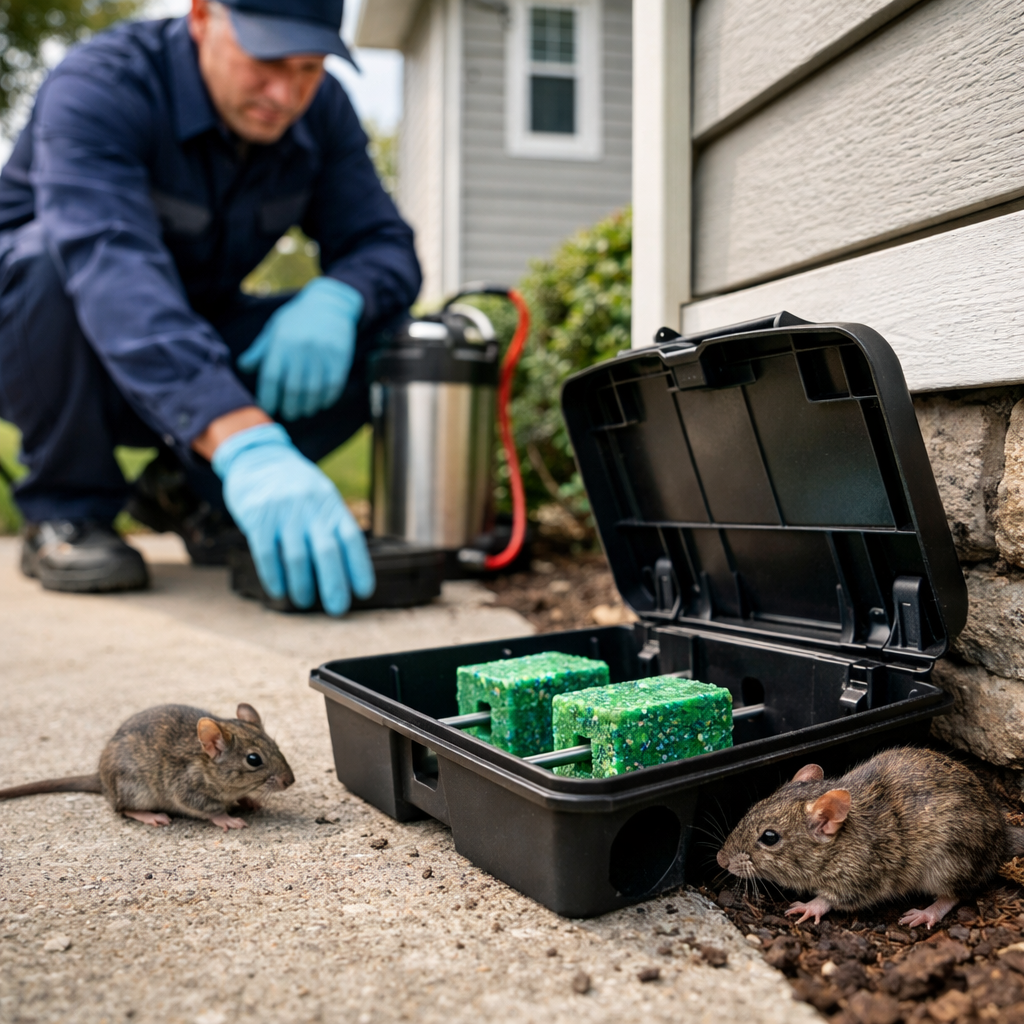
Bait stations are the devices designed to securely hold the rodenticides and insecticides protecting it from the elements and keeping it out of the reach of children and pests. Placed along walls and near entry points, temper-resistant, lockable plastic containers holding the bait (secured on the rod) are used to lure and kill the pests with rodenticides. The poisonous bait acts slowly over 24 to 72 hours, preventing bait shyness and allowing the rodents to return to the station, ensuring safe eradication.
Understanding Professional Rodent Control Methods
Do you hear scurrying noises in the wall at night and find torn bags of dog food in the garage? Professional rodent exterminators use advanced techniques and equipment for safe removal of infestations and preventing future reoccurrences. Bait stations are designed to protect children, pets, and non-targeted wildlife from direct consumption of the bait. If you are searching for mice exterminator near me, read our brief guide below to understand how bait stations and rodenticides work.
| Did you know?According to the National Pesticide Information Center (NPIC), rodenticides pose great secondary poisoning risks to dogs, cats and wildlife. A 2021 study showed that 100% of red-tailed hawks admitted to a California clinic tested positive for SGARs (Second-Generation Anticoagulant Rodenticides). |
Here is your guide to effective rodent management by professionals to protect your home and family.
- How Do Rat Bait Stations Work?
Rat bait stations attract rodents with the bait and lure them into the dark containers. Providing a safe-feeling environment inside, these stations encourage rats to enter, eat bait, and return, rather than being trapped inside. Rat bait stations are larger with bigger entry holes and a heavy-duty anchoring system.
The slow-acting rodenticides cause the rats and mice to die away from the station within a few days, preventing other rodents from associating the bait with immediate danger (bait shyness) and ensuring safe eradication.
| Important factRodenticide ingestion kills over 100 pets annually, with roughly 10,000 poison control calls related to pets. |
- How Do Rodenticides Work?
Depending on their active ingredient, rodenticides work in various ways to kill the rodents. For large-scale infestations, rodenticides are a more time efficient and cost-effective method than setting numerous traps to control the rat colony.
Anticoagulants
Anti-coagulants work by preventing the blood from clotting normally, leading to uncontrolled internal bleeding and eventual death.
- First-generation anticoagulants (FGARs) require rodents to consume the bait for several days consecutively to become effective.
- Second-generation anticoagulants (SGARs) are single-feed baits and deliver a lethal dose in a single feed.
Non-Anticoagulants
- Bromethaline affects the nervous system, leading to paralysis and death of the rodent.
- Cholecalciferol (Vit D3) at high doses disrupts the body’s calcium balance, leading to excessive calcium in the blood, causing organ damage and death.
- Zinc Phosphide reacts with a rodent’s stomach acid and damages internal organs, leading to rapid death.
- Strychnine is a neurotoxin, causing musclespasms, leading to the rodent’s death from respiratory failure.
| Fast FactThe North American rodenticide market is projected to reach $2.59 billion by 2030, growing at a CAGR of 6.3%. |
- Main Types of Rodent Bait Stations
Temper-resistant bait stations
These are secured with locks or fasteners to keep pets and children safe and are considered mandatory in areas accessible to the public.
Weather-resistant (Outdoor) bait stations
These are built to withstand rain and sun and are designed to keep the bait dry and appealing to outdoor rodents.
Disposable bait stations
These are pre-loaded with bait and are designed for one-time use only and discarded after the bait is consumed.
Refillable bait stations
These stations can be refilled and are durable, allowing for the replacement of bait blocks or pellets. These are ideal for long-term pest control.
Automated bait stations
These advanced options use sensors and automated rotating and dispensing mechanisms to ensure fresh bait is always available.
- According to the American Association of Poison Control Centers, more than 8500 cases of human poisonings were reported in 2021, with more than 8000 involving children.
Conclusion
Rodenticides are available in different forms, including blocks, pellets, paste, liquid or grains. Professional mice exterminators can tailor the bait to specific environments and different infestation levels. Temper-resistant stations ensure compliance. When combined, bait stations and rodenticides offer a powerful, responsible solution to protect human health and property from the harmful effects of rodent infestation.
FAQs
Are rat bait stations effective in getting rid of rodents?
While rat bait stations are effective in reducing rodents, it is often insufficient when dealing with a large colony and do not eliminate the problem.
Is trapping considered a good solution for rat control?
Trapping is the safest, most effective, and most humane method to reduce the number of rats inside the home or in the garage but it works only for small to moderate infestations.
What is the best way to control pest infestation?
Remove food sources, water, and dispose of garbage regularly from your home to prevent pest infestation.